


By Scott Ingleton

With Typhoon Hagibis sweeping through Japan, some World Cup matches have been cancelled, including England vs France. With England going through to the quarter finals top of Pool C and due to face Australia, is it reasonable to expect England to progress to the final four? Or has the typhoon concluded an easy pool stage, leaving them unprepared to face the more practiced Wallabies?
After the opening weekend of the World cup, those watching Pool C would have been chomping at the bit waiting for England face France. The Argentina match proved to be disappointing after the early exit of Lavanini for a dangerous high tackle on Farrell, and fans (myself included) would have been keen to see how the Red Rose defence held up against the pace and flighty footwork of Damian Penaud, Gael Fickou and Antoine Dupont. Considering England have only conceded 20 points this entire tournament (almost 50% less than they have scored in any single match thus far), a true test of their defence in a pressureless scenario would no doubt be of a benefit to the English.
With France historically being very impressive at World Cups (reaching, but not winning, the finals in 1987, 1999 and 2011) but wholly unpredictable, the match was shaping up to be a must watch. However, fans were robbed of this potential try fest with the arrival of Typhoon Hagibis, a storm so large it Encompassed almost 3/4 of the country. Rightly or wrongly, the match has been canceled, with England going through top of Pool C and with an extra weeks of training and rest.
Each match England has played has brought something new to what we, as spectators, can expect when watching them play. The match against Tonga showed us that the English defence was solid, though the attack needed some work (alongside some practice with slippery balls). The game against the United States was an improvement, showing their ability to targets and nullify big players to effectively negate a teams’ strengths (as shown through Taufete’e having a quiet game and the heavily right footed AJ Macginty being tied to the left side of the pitch, meaning he had to leave clearance duties to poorer kickers in order to gain any ground). Finally, in the Argentina match England showed the prowess going wide, with four of the six tries coming from fastball out to the wings. The France game was supposed to be a culmination of all this work; a well structured, organised team facing a frankly erratic force the blasts moments of magic through players such as Dupont, Raka, Medard and Lopez. The more England defeated lower opposition, the more it felt like France would ‘show up’ and halt the England hype train dead in its tracks.
Now, however, we will never know what might have happened. Many have said that is England had won this game it would cement the chances for reaching the final; a transition match with no real necessity for a win (seeing as they were already through to the knockout round) where all the tactics could be brought together in preparation for the next stage. With the steppingstone now gotten, will England be able to prepare adequately for the huge leap in quality and pressure? Only so much can be accomplished on the training pitch, and while Jones seems very happy with the result (he has been quoted as saying “someone is smiling on us – the Typhoon gods maybe?”) he must be at least slightly concerned with his teams lack of top class opposition in recent months.
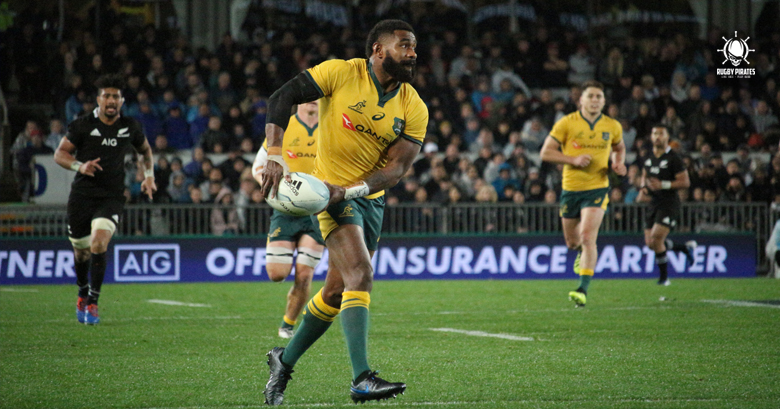
So far in this tournament, England has the fourth most points scored, joint fourth most tries scored, fourth most carries over the gain line and – crucially – the least points conceded overall (two less than the 22 conceded by New Zealand in the same amount of games). These are very promising statistics, especially as the low concession of points shows us that England can manage games and close out the opposition very well. The handling has also greatly improved, losing the ball forward twice against Argentina in comparison to nine times against Tonga. Each time the ball is lost forward and attacking opportunity is over and the advantage is gifted to the other team; with the ball being slow so slippery in Japan due to the conditions there, handling has become that much more important, crucial factor in whether a team is victorious or not. Considering the Australian attack is so heavily based on quick ball, having a good scramble defence and solid handling will be key aspects of the England game plan. The scramble defence is something we have seen rarely, as England have yet to face a rapid enough attack to force them to use it. However when we look at the tries England have conceded, we can find flaws are not structural but individual errors. Moroni’s try for Argentina was a well worked move off a lineout that would have been stopped short had the replacement Mako Vunipola (recently cleared for play after an injury against Ireland and almost ruled him out of the world cup) made his tackle. One moment of poor concentration and Argentina are up seven points. Against an Australian side full of attack is such as Will Genia, Marika Koroibete , Samu Kerevi alongside the brilliant back row duo of Michael Hooper and David Pocock, these mistakes will certainly be punished. On the other hand, England’s response to Moroni’s try was rapid and brilliant, with Jack Nowell superbly touching down in the corner three minutes after the concert to try, and one can only hope this professional passion pushes forward into the match on Saturday.
Whatever happens, England vs Australia is queuing up to be a spectacle. England looking to get revenge for the hammering in the pool stages of 2015, and Australia looking to fight for the title that David Pocock so deserves before his retirement from test rugby after the World Cup. As it stands, England do look the more settled side, and the extra rest may well benefit the Red Roses. But the men from Down Under will be damned if they keel over and gift their old rivals an easy victory. One thing is for sure; this will be a fantastic match to kick off the knockout round.