


by Scott Ingleton
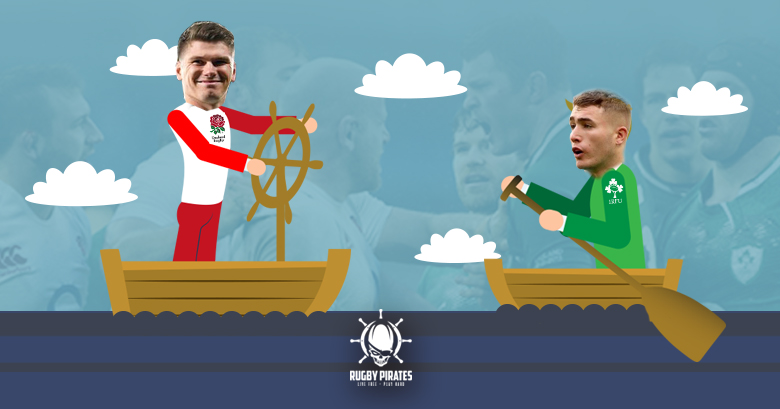
The result on Saturday has been lauded by English critics and condemned by their Irish counterparts. Rightly so, it is only to be expected when a rampant England smash out their record score against a team that, only last year, took them to the cleaners in the very same venue. But is this the result of England finally returning to the dizzying heights of truly top tier rugby, or has the Irish steam train run out of fuel?
In the eighth minute, Ireland’s Iain Henderson stole the ball from the English lineout maul, starting a move that culminated in Jordan Larmour touching down. It was well worked, quick, and a little bit lucky, all things a team needs to win a big away game (for example, in a world cup). However, almost everything after that move, Ireland would like to forget. A series of poor or ineffective lineouts, weak box kicking from Murray and some frankly invisible performances from high-class players including CJ Stander, Peter O’Mahony and Jacob Stockdale (alongside some alarming injuries) drew a very ugly picture no parent would put on their fridge. This is a stark contrast from the Grand Slam winning, All Black beating Ireland team of 2018, only losing one game (to Australia, only to win the tour 2-1 regardless). In 2019, Ireland have only recorded four wins out of seven, losing twice to England and once to Wales.
England had an almost polar opposite experience over the past 18 months. Recording only six wins in thirteen matches in 2018 (including their hammering at the hands of a very impressive Barbarians side), England looked to have lost all their self-belief and classic English arrogance that had been so vital during their 2016/17 campaigns across Australia, Argentina and the Six Nations. However, while 2019 has only given them six wins in nine games, the loses have been much closer than their wins. Two defeats to Wales (21-13 and 13-6 respectively) and that incredible draw against Scotland on the final day of the Six Nations means that, were we to tally all the scores, England have a points difference of +140. This means, on average, when England win games they win by just over two converted tries. This is a far cry from the team that capitulated against South Africa, and even further from the team that tumbled out of “their own World Cup”. Against Ireland they looked solid, composed, confident, and exceptional at the set piece (may all the old Gods and the new bless Maro Itoje).
But were Ireland a strong enough opponent? They’d had less matches played this Summer as opposed to England (Ireland have only played one game; a victory where an experimental Irish side played essentially the Italian second squad), their pre-season training in Portugal was, according to Peter O’Mahony, “one of the toughest he’s ever had”, and their injury list is more like a roll call for the best and broken. With their lineout a shambles and their usual attritional gameplan not setting off from the hands of the inexperienced Byrne, one has to ask; what could England really learn from this encounter?
It isn’t difficult to defeat a team that has mentally lost. This was on show by the 28th minute, when the Irish defence failed to spread in time to catch Daly, and the fullback was over the line in moments. This game, while great from an England fans point of view, really does not show us much in terms of preparation for the world cup. If anything, fans should be concerned that England may have peaked in a friendly game against a demoralised side in their home stadium, rather than on October 5th against a dangerous looking Argentina, or perhaps October 12th against whichever French team decides to turn up. In fact, it’d surely be preferable to peak on November 2nd in Yokohama, where Farrell and Ford can finally raise the Webb Ellis cup. Regardless, while this was a stunning victory, that Irish side was not the same as those in green from last year, and the question still remains; are England capable of beating world class opposition? You won’t find the answer watching this game.